Draft · SMS Squad Review · January 2026
Incident Management Standard
How we identify, respond to, record and investigate safety, health and wellbeing incidents — together.
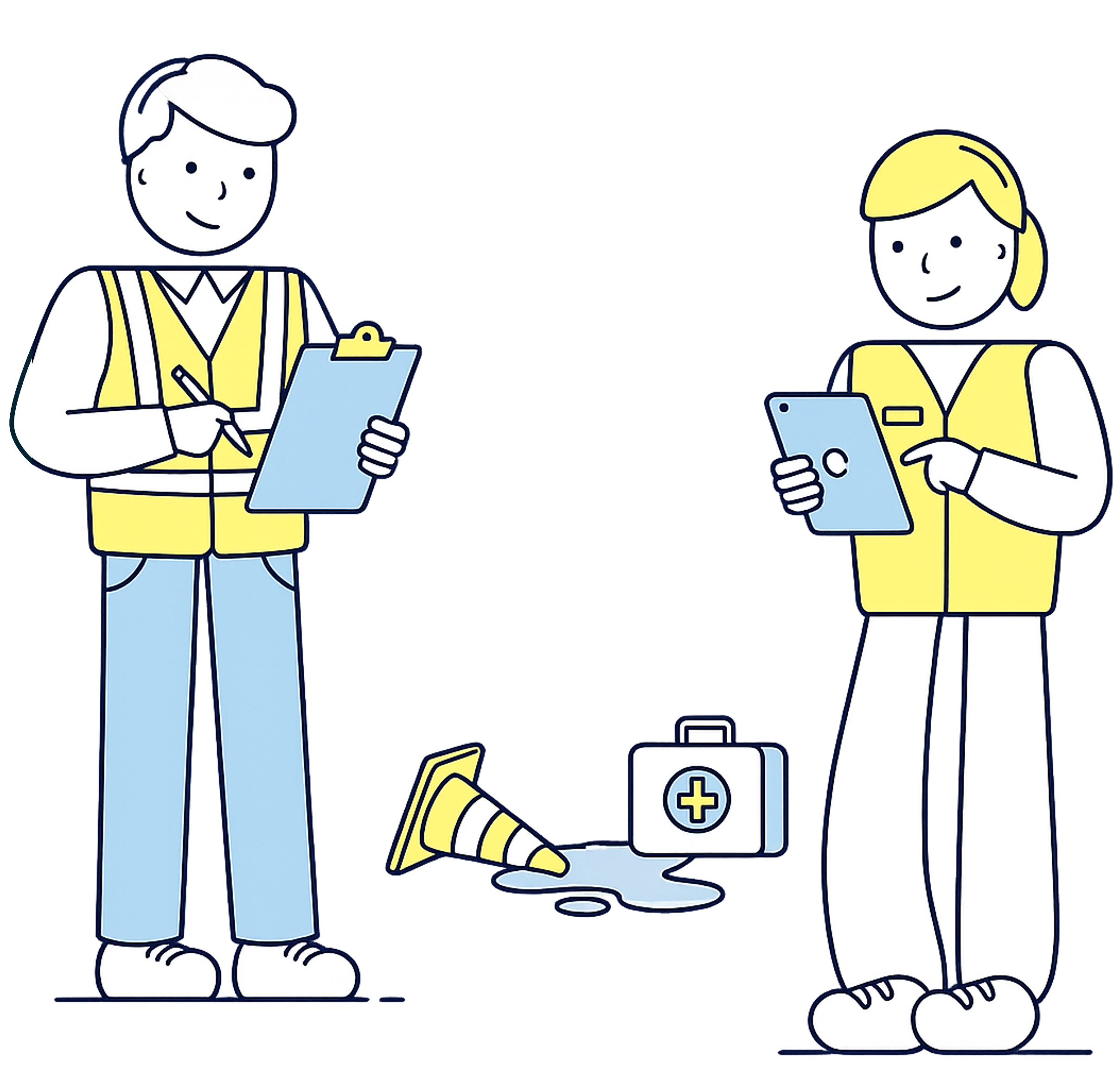
How we identify, respond to, record and investigate safety, health and wellbeing incidents — together.
This Standard establishes the mandatory process for identifying, responding to, recording and investigating Safety, Health & Wellbeing (SH&W) incidents across the Woolworths Group.
It applies to all Woolworths Group operations in Australia and New Zealand — covering every activity that may impact the safety of our people, contractors, visitors, customers, and our assets.
All Business Units must implement this Standard. Where a requirement is not yet in place, a clear implementation plan must exist.
For emergency management requirements, refer to the Emergency and Crisis Management Standard.
An unplanned event resulting in, or having the potential to result in, harm, injury, illness, property damage or environmental harm.
An event that could have resulted in harm but did not.
An incident exposing a person to serious risk from immediate or imminent hazard exposure.
An incident with potential for catastrophic outcome — regardless of actual outcome.
An incident required to be reported to a regulatory authority under legislation.
Confidentiality applied when documents are created primarily for legal advice or anticipated litigation.
A condition or situation with the potential to cause harm to people, property or the environment.
Physical or psychological harm arising from Woolworths-related activity.
The manager accountable for ensuring incident response, recording and review at their site or business unit.
It protects people, ensures compliance, and strengthens how we learn and improve as an organisation. When we manage incidents well, we don't just respond — we prevent the next one.
A pallet falls from height in a back dock area. No one is seriously injured — but the potential was catastrophic. Here's what made the difference:
| Stage | ✕ Poor Management | ✓ Good Management |
|---|---|---|
| Scene | Area not secured | Area cordoned immediately |
| Record | No record created | Incident recorded within 24 hrs |
| Evidence | Scene disturbed | Scene preserved |
| Escalation | No escalation | SH&W notified |
| Compliance | No regulator assessment | Notifiability assessed |
| Investigation | No investigation | Full investigation completed |
| Sharing | No communication | Safety Alert shared |
| Improvement | No change to controls | Storage system redesigned |
Immediately report non-confidential incidents and near misses. Report confidential incidents via a trusted source. Participate in investigations when asked. Your report could prevent the next incident.
Everything that needs to happen — grouped by phase, with timings and responsibilities at a glance.
Provide first aid. Call 000 (AU) / 111 (NZ) if life-threatening. Tag out faulty equipment. Screen for privacy.
If potentially notifiable — do not disturb the scene until the regulator confirms otherwise. Exception only to assist an injured person or prevent further harm.
Two key numbers for immediate escalation and wellbeing support.
All incidents must be verbally reported straight away. Contractors, visitors and customers report to their host.
The Incident Management Centre must be contacted for any of these trigger events:
These incident types typically require regulator notification and must be escalated without delay.
Create the incident record with all required fields completed promptly.
Incident type determines the workflow and notifications that follow.
Certain incidents bypass standard notifications and follow a separate confidential pathway.
Non-confidential incidents are reviewed through a 3-stage escalation process.
Two ratings required: actual consequence + potential consequence.
The right method for the right situation. HSRs and stakeholders are consulted throughout.
| Level | Method | Reviewed by |
|---|---|---|
| 4–5 | Line Manager Review | Site Manager |
| 3 | 5 Whys | Site Manager |
| 1–2 | ICAM | Head of Safety |
| Fatality | External Investigator | Director of Safety |
Two ratings are required — actual and potential consequence — for every incident.
May only be closed once all conditions are confirmed and signed off within 21 days.
De-identified learnings are distributed across the Group. Only de-identified information may be used.
Investigators must be appropriately qualified and experienced before conducting investigations.
Incident management processes are reviewed through all three lines of assurance to ensure ongoing compliance.
The central system for recording, managing and tracking all incidents. All incident records must be created and maintained here.
24/7 escalation support for serious incidents. Contact when emergency services attend, for dangerous occurrences, or HiPo events.
Psychosocial support for team members involved in incidents. Available 24/7 for emotional and mental health support.
Manages Legal Professional Privilege determinations, access and visibility for sensitive investigations.
Investigation method for Level 3 incidents. Conducted by site-experienced investigators, reviewed by the Site Manager.
Used for Level 1–2 incidents. Requires certified investigators and is reviewed by the Head of Safety.
Engaged for fatality investigations, reviewed at Director of Safety level.
Standardised template for capturing and sharing safety learnings across the Group in de-identified form.
Supports team members reporting confidential or sensitive incidents safely, including via trusted sources.
The companion standard for emergency management requirements — refer when an incident escalates to emergency level.
HR support for complex incidents involving team member relations, disciplinary matters or sensitive case management.
Applies where drug or alcohol involvement is identified or suspected in an incident.